Better Recycling · Checked against Suffolk Recycling · Updated 19 Oct 2026
Suffolk food waste bins: what goes in the caddy
Weekly collections county-wide — how the two caddies work, which liners are allowed, and what to do if yours is missing.
Quick answer
Put leftover food, peelings, meat, bones, dairy, tea bags and coffee grounds in the weekly food caddy. Packaging, oils, liquids and garden waste stay out. Liners are optional — compostable bags, carrier bags or bread bags are OK; black bin bags are not.
How Suffolk’s food waste caddies work
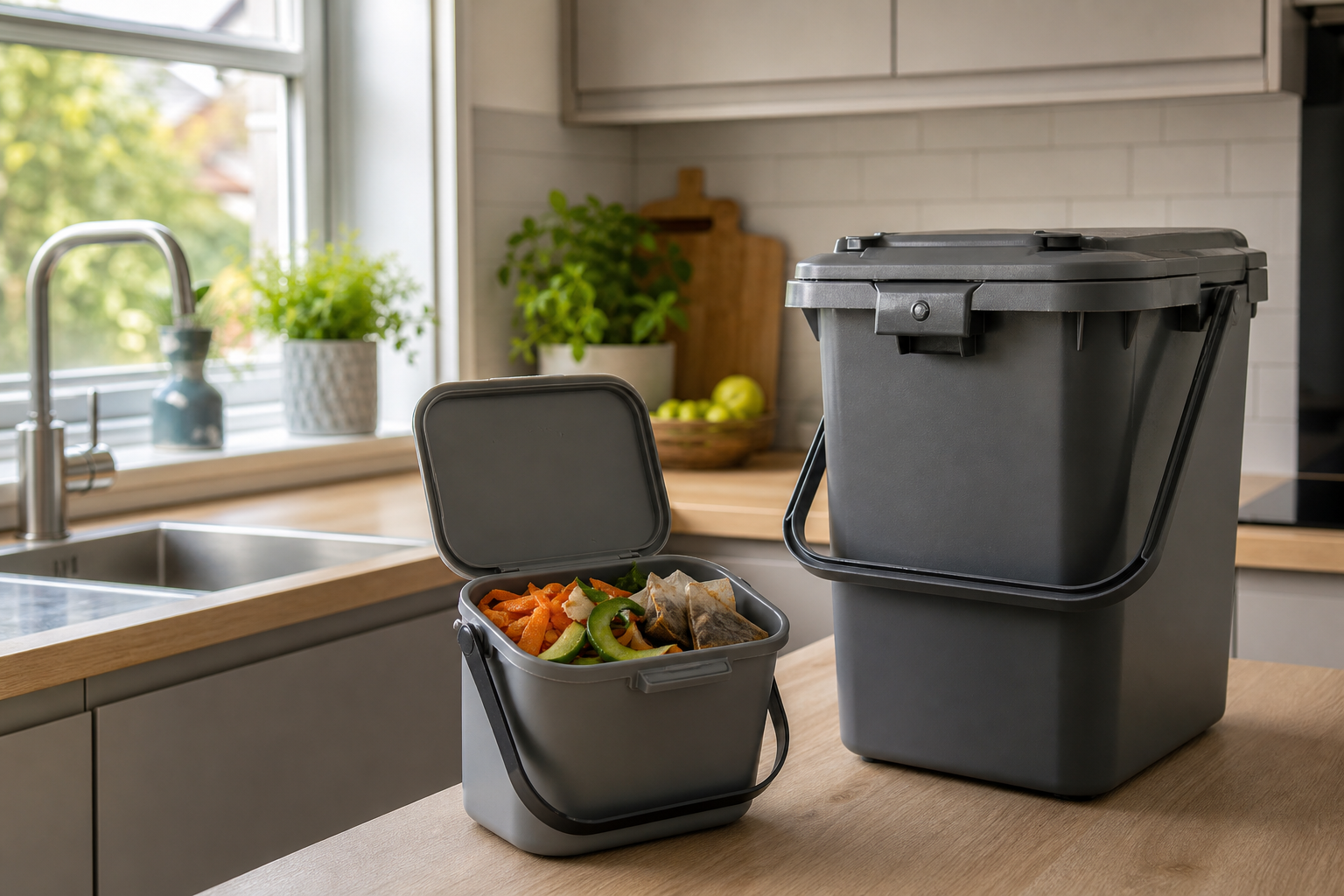
Most households have two food waste containers from Better Recycling:
Indoors
Kitchen caddy (5L or 7L)
Worktop or under-sink pot for day-to-day scraps. Empty it into the outdoor bin — don’t present the small caddy for collection.
Outdoors
Lockable food bin (~23L)
This is what crews empty every week. Lock the lid between collections to cut smells and keep foxes out.
Step by step
- 1
Line the kitchen caddy (optional)
You don’t have to line it. Compostable liners, carrier bags, bread bags, newspaper or kitchen roll are fine. Never use black rubbish bags.
- 2
Fill the indoor caddy
Scraps go in the small kitchen caddy (usually 5L or 7L) on the worktop or under the sink.
- 3
Tip into the outdoor bin
Tie the liner and empty into the larger lockable outdoor caddy (about 23L). Don’t overfill — crews won’t take loose bags beside it.
- 4
Lock and present weekly
Pull the handle forward until it clicks to lock. On collection day put the outdoor caddy out with the handle upright/locked as your council shows.
Official guide: Suffolk Recycling — your new food waste collection.
What goes in the food waste bin
Yes — put these in
- •Leftovers and plate scrapings
- •Fruit and veg peelings, cores and stones
- •Meat and fish (cooked or raw), including bones and shellfish
- •Bread, cakes, pasta, rice and cereal
- •Eggshells, cheese, yoghurt and other dairy
- •Tea bags and coffee grounds
- •Out-of-date or mouldy food
- •Leftover pet food (wet or dry)
- •Solid fats (not pouring oil)
No — keep these out
- •Packaging of any kind (including “compostable” packaging)
- •Oils, liquid fats, milk and other drinks
- •Garden waste, grass, prunings, soil or compost
- •Windfall / fallen fruit (use garden waste where accepted)
- •Cut flowers and house plants
- •Nappies, sanitary products, animal or human waste
- •Pet bedding or litter
- •Foil, wrappers or cartons
If it isn’t food, it doesn’t belong here. Wrong items can mean the whole caddy is left unemptied.
Liners and bags — what’s actually allowed
This is where a lot of advice online gets it wrong. Suffolk Recycling says you do not have to use a liner, and when you do, these are all accepted:
- Compostable / biodegradable food-caddy liners (sold in most supermarkets)
- Ordinary carrier bags and food bags (e.g. an old bread bag)
- Newspaper or kitchen roll wrapped around scraps
- Food waste put in loose with no bag at all
Do not use black rubbish bags. Rough sizes: ~10L liner for the indoor caddy, ~25L for the outdoor bin. Councils generally do not supply free replacement rolls after the starter pack.
Collection days by council
Food waste is weekly everywhere. Other bins differ — check your postcode rather than an old fridge magnet:
- Ipswich Borough Council — Weekly food; refuse fortnightly; blue & green recycling every 4 weeks.
- East Suffolk Council — Weekly food; refuse & recycling typically every 3 weeks.
- West Suffolk Council — Weekly food; refuse fortnightly; blue & green recycling every 4 weeks.
- Babergh & Mid Suffolk — Weekly food; refuse & recycling typically every 3 weeks.
Use our bin collection day checker or find your council.
Missing bins, flats and contacts
Still missing a kitchen caddy, outdoor food bin or green-lidded paper/card wheelie? Report it to your district or borough waste team — not Suffolk County Council (they run recycling centres, not kerbside).
Flats and communal stores can use shared outdoor containers on a different timetable. You should still get a kitchen caddy; ask the landlord or managing agent if nothing has changed.
Struggle to move bins? Ask about assisted collections or smaller containers. Extra outdoor food bins can often be requested if yours fills every week.
- Ipswich Borough Council
01473 432000 · recycling@ipswich.gov.uk
- East Suffolk Council
0333 016 2000 · customerservices@eastsuffolk.gov.uk
- West Suffolk Council
Via West Suffolk customer services (see council site)
- Babergh & Mid Suffolk
0300 1234 000 (option 4) · recycling@baberghmidsuffolk.gov.uk
Directory: Suffolk Recycling — contact your council.
Smells and practical tips
- Lock the outdoor lid between collections — that’s what it’s for.
- Freeze smelly scraps (fish skins, meat bones) and tip them out on collection morning.
- Rinse the kitchen caddy regularly; bicarb helps between washes.
- Don’t leave side bags next to the outdoor bin — they won’t be taken.
- Cut waste first: plan meals and freeze leftovers so less hits the caddy. See our composting guide for peelings you prefer to keep at home.
Frequently asked questions
When did Suffolk food waste collections start?+
Weekly food waste collections started across Suffolk on 1 June 2026 as part of Better Recycling (UK Simpler Recycling). Most homes received a small kitchen caddy and a lockable outdoor food bin.
What goes in the Suffolk food waste caddy?+
Leftovers, peelings, meat and fish (including bones), dairy, bread, pasta, rice, eggshells, tea bags, coffee grounds, mouldy food and leftover pet food. No packaging, oils, liquids, garden waste or nappies.
Can I use plastic bags as food waste liners in Suffolk?+
Yes. Suffolk Recycling accepts food waste loose, in compostable liners, or in plastic bags such as carrier bags or old bread bags. Do not use black rubbish bags. One free roll of compostable liners was supplied with many caddies; replacements are sold in supermarkets.
Do compostable liners actually break down?+
Suffolk’s food waste goes to anaerobic digestion. Bags are separated early in the process — compostable liners don’t break down properly in those conditions, and plastic bags aren’t recycled either. Liners are mainly for cleanliness at home; the food itself becomes biogas and bio-fertiliser.
How often is food waste collected?+
Every week, usually on the same weekday as your other bin collections, by a dedicated food-waste crew. Use the bin day checker or your council calendar for the exact day.
I haven’t received my food waste bins — what should I do?+
Report a missing delivery to your district or borough waste team (contacts below). Until the outdoor caddy arrives, put food scraps in general rubbish or home-compost what you safely can.
Can I put food waste in my brown garden waste bin?+
No. Garden waste composting cannot take cooked food, meat or dairy. Kitchen food belongs in the food caddy. Windfall fruit usually goes in garden waste where that service accepts it — not the food bin.
My food bin is often full before collection day — what can I do?+
Ask your council about an extra outdoor food bin. Don’t leave extra bags beside it — they won’t be collected. Reduce waste where you can, and take surplus to a Suffolk Recycling Centre if needed.
I already compost at home — do I still need the caddy?+
Home composting is still useful for many peelings. The weekly service is ideal for meat, bones, dairy and cooked leftovers that are awkward to compost at home — many households use both.
What happens to Suffolk food waste after collection?+
It goes to an anaerobic digestion plant that produces biogas (energy) and bio-fertiliser for farmland, instead of going for energy-from-waste with general rubbish.
Related on Suffolk Daily
Based on Suffolk Recycling Better Recycling guidance and district council pages, reviewed 2026-10-19. Not an official council publication — communal bins and some housing schemes can differ. Always follow your local waste team if they give different instructions.