Updated July 2026 · Better Recycling
Suffolk Recycling & New Bin System
What changed in June 2026 — food waste, paper and card, mixed recycling, and less frequent black bins.
Most searched
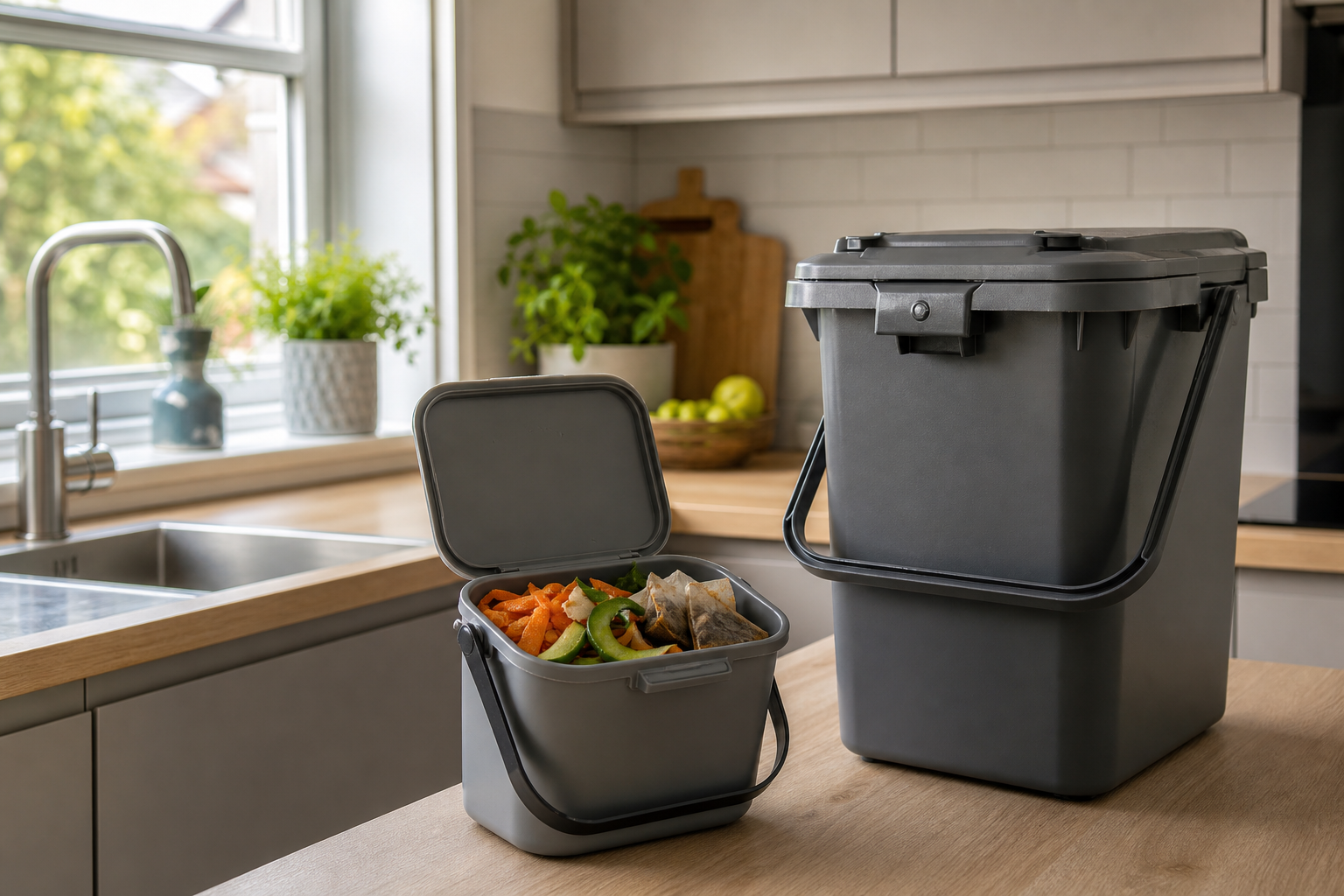
Looking for the food waste caddy?
Full guide to what goes in, bags, smells, missing deliveries and FAQs.
Open food waste guide →What changed in June 2026
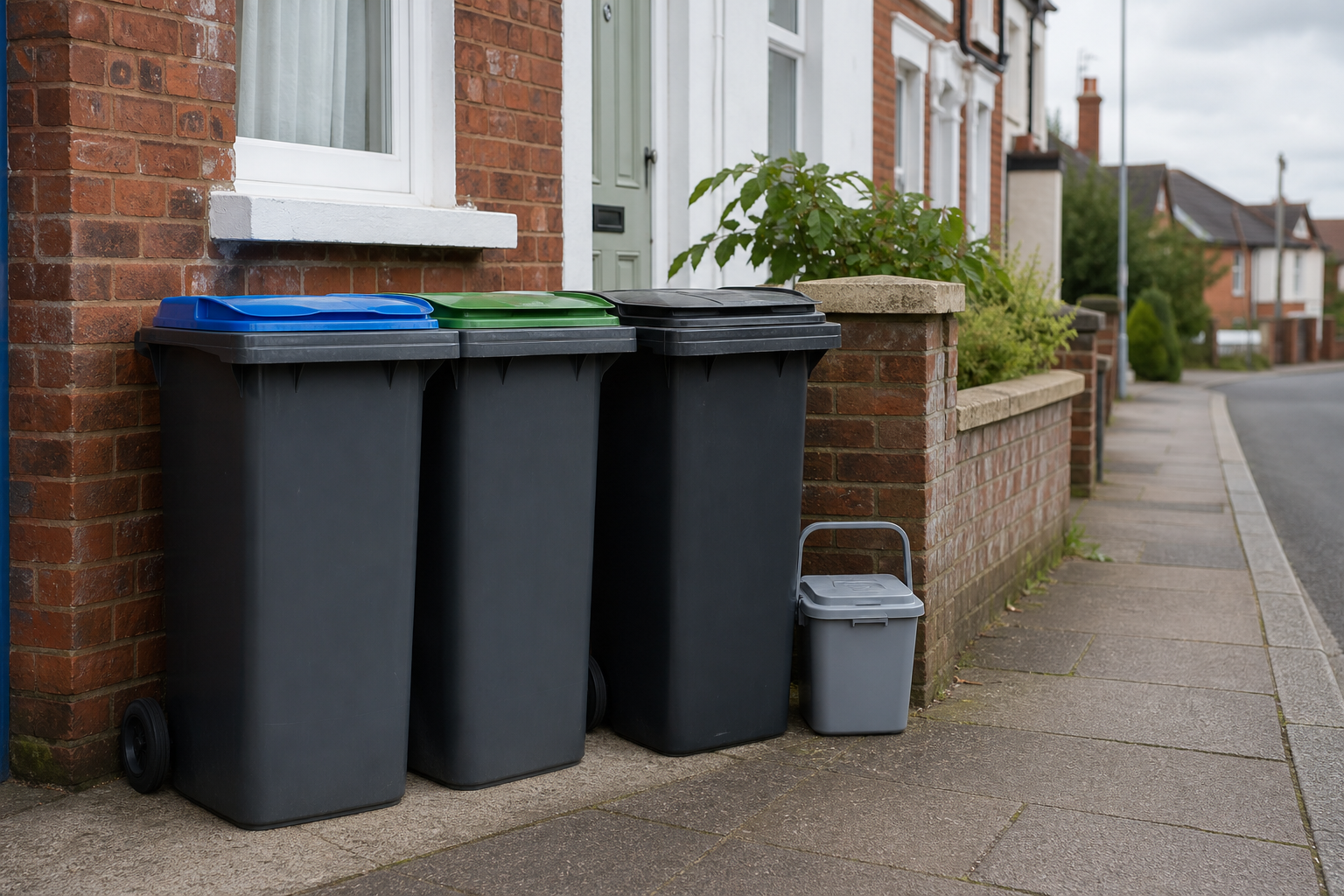
- Weekly food waste — kitchen caddy + outdoor lockable food bin in most homes.
- Separate paper and card — usually a green-lidded wheelie (layout differs slightly by district).
- Wider mixed recycling — glass, cartons, more plastic film and carrier bags in many streams.
- Changed refuse frequency — general rubbish often every three weeks (or adjusted fortnightly) because food has left that stream.
Garden waste (brown bin) remains a paid subscription — never put kitchen leftovers in it.
Quick “which bin?” reference
Food caddy
Leftovers, peelings, meat, bones, dairy, tea bags, coffee grounds — weekly.
Full food waste guide →Paper & card
Clean dry paper, cardboard, newspapers, magazines, books, egg boxes. Keep greasy cardboard out.
Mixed recycling
Bottles, pots, tubs, trays, cans, foil, glass jars, cartons, and many clean plastic films.
General rubbish
Nappies, bagged pet waste, vacuum dust, truly non-recyclable items — not batteries or electricals.
Find your collection day
Calendars were posted in May 2026, but days can differ by street. Use your council’s address lookup or our tools:
Contamination tips that still matter
- Rinse jars, cans and trays — wet food contaminates whole loads.
- Keep paper and card dry; rain-soaked cardboard is often rejected.
- Squash bottles and flatten boxes so bins last between collections.
- Never bag mixed recycling in black sacks unless your council says otherwise.
FAQs
What is Better Recycling?
Suffolk’s name for meeting national Simpler Recycling rules: weekly food waste, a core set of recyclables collected everywhere, and paper/card kept separate so it stays high quality.
Why is refuse less frequent?
Sampling showed much of the black bin could be recycled once food and packaging had better routes. Weekly food collections let councils empty residual bins less often.
Where does it go?
Mixed recycling and fibre are processed via Great Blakenham. Residual waste goes to energy-from-waste (not landfill). Food waste goes to anaerobic digestion for biogas and fertiliser.